
Cohort 1 · Applications open
Become the architect behind the revenue system. Six weeks, one real business brief, carried from revenue strategy through process architecture in Puzzle to orchestration in Clay.
Kicks off November 2
Apply now
Resource · Maven lightning lesson · 30 Sep 2026
By Pawel Nical · Co-founder at RevTech, Clay Solutions Partner
The slides from Pawel Nical's lightning lesson in the Clay × Maven series: how a static ICP document becomes an active GTM layer in Clay.
An ICP as a system is an ideal customer profile that runs, instead of sitting in a document. Qualification gates remove the accounts that can't buy, signals rank the rest by relevance and urgency, and tiers route each account to the right next step. Built in Clay, it decides which accounts the team works first, the same way every time.
PDF · 48 pages · 7.9 MB
Your download has started.
If it didn't start, open the PDF.
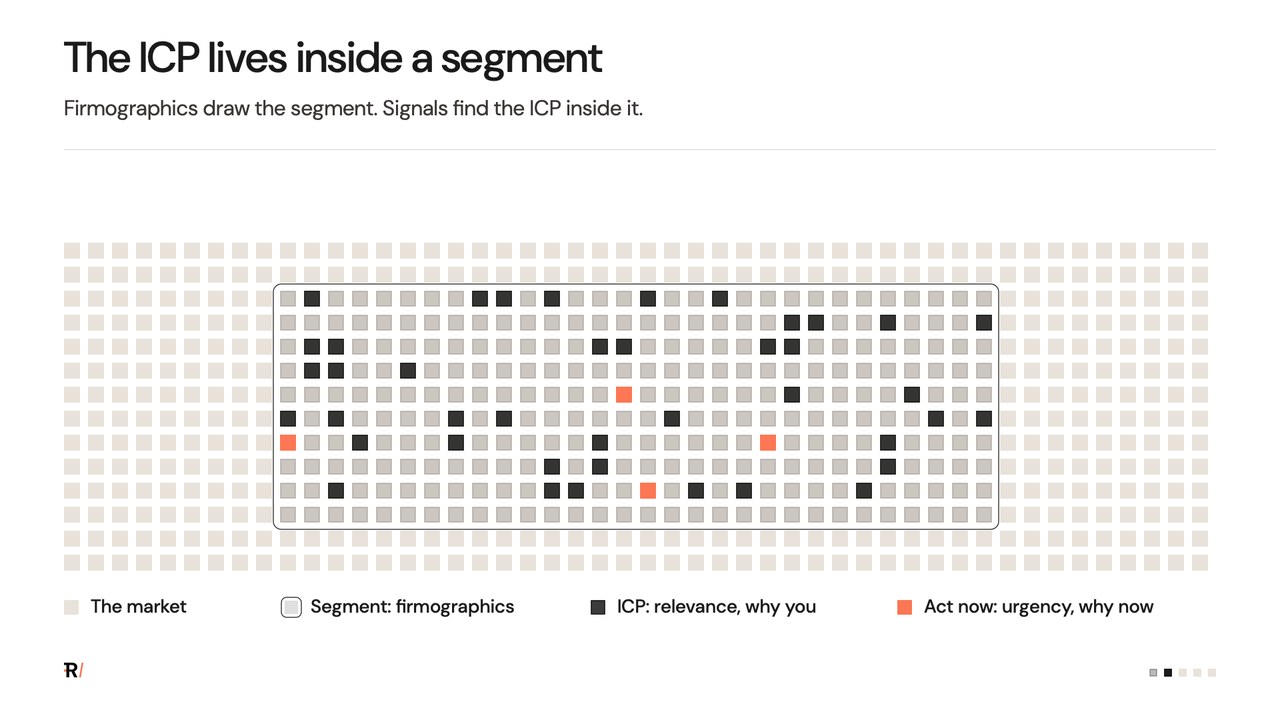
Ask a team for their ICP and you often get a bracket: tech companies in Europe, 10 to 100 employees. That is a market segment, and a loose one. Firmographics such as industry, region and size draw the segment. The ICP is the profile of the best 10–20% of customers inside it, the slice that generates the most value. Signals are what find it: relevance answers why you, and urgency answers why now. In B2B you sell to two buyers at once, so the ICP needs both halves: the ideal company profile, what kind of company buys, and the ideal persona profile, who inside it decides and who can champion you.
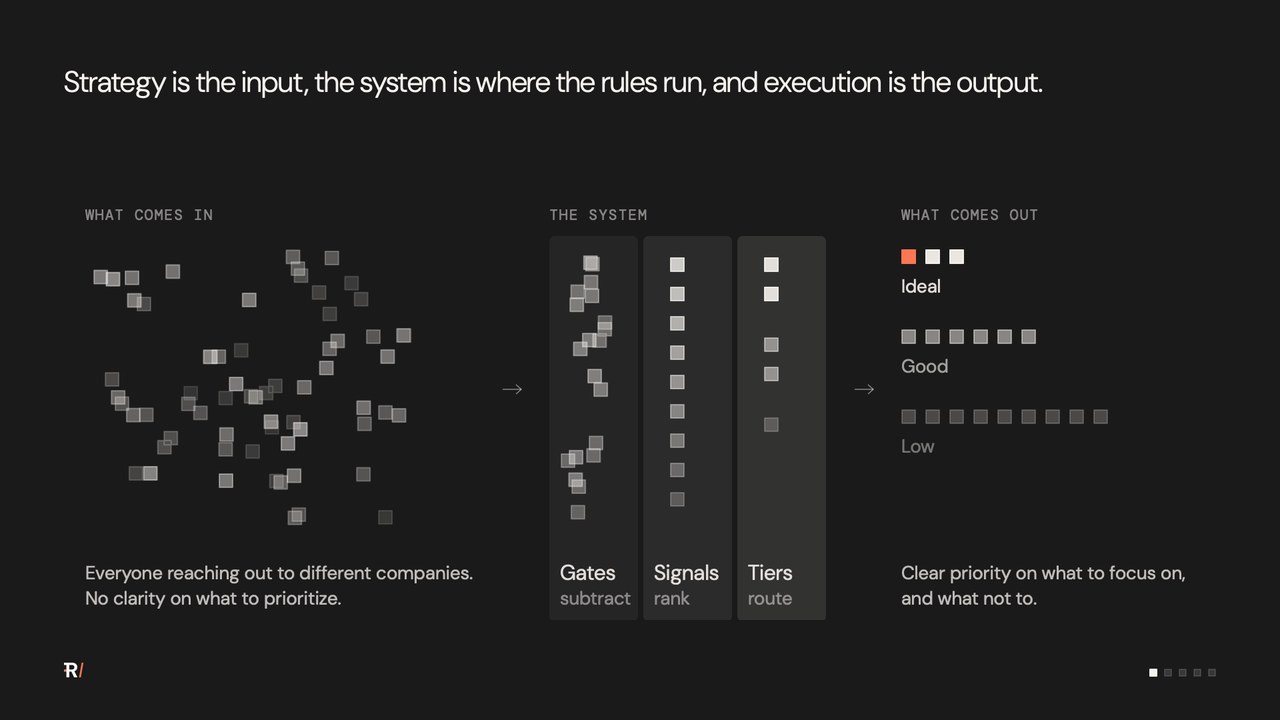
Most teams get to a clear, documented ICP and stall there. You cannot run a go-to-market process through a document: everyone reads it their own way, so execution drifts. Strategy is the input, the system is where the rules run, and execution is the output. Most ICPs stop at strategy, agreed once with leadership and then filed. Process is the missing middle: it turns the strategy into repeatable steps that reach the market. The step from a documented ICP to one activated in the system that runs it is a process step, not a better document.
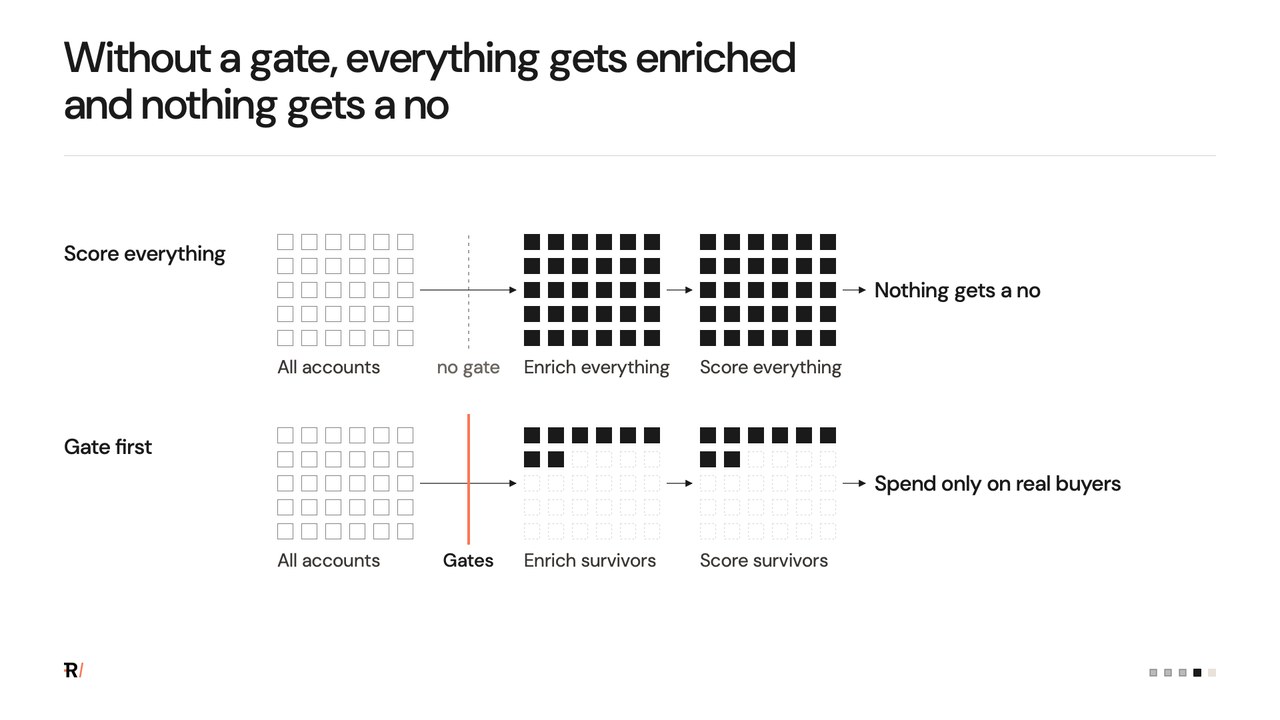
A qualification gate is a yes or no question that runs before any enrichment or scoring. Gates are binary; scoring is a range. They run in order, ranked by decision weight, and each one removes accounts that can't buy, so the list shrinks before you spend a credit. It is a reverse waterfall: an enrichment waterfall stops on the first hit, while a qualification waterfall stops on the first miss. Without gates, everything gets enriched and nothing gets a no. Some fields do both jobs: headcount can be a gate below a floor, say 50 employees, and a signal above it, where a bigger team scores higher.
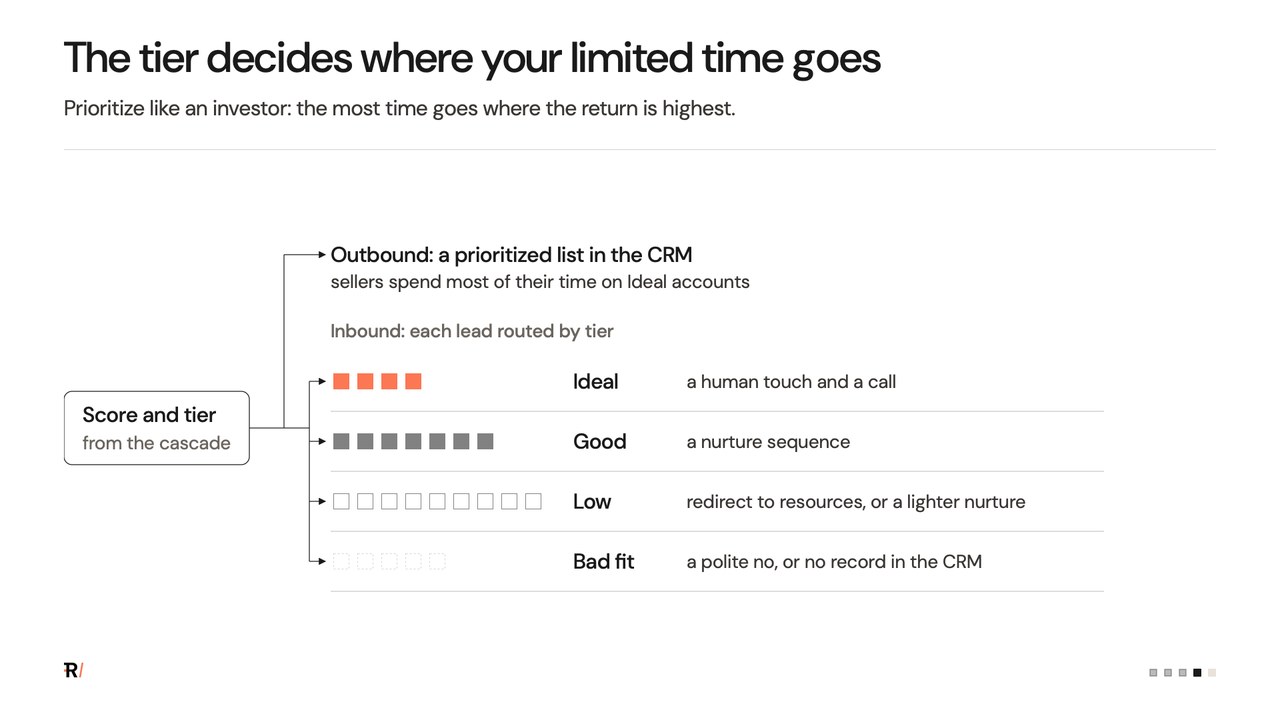
Signals run only on the accounts that cleared the gates. They measure two things: relevance, which advances conversion, and urgency, which advances velocity. Without urgency, a good-fit account can buy in three months or a year from now, not tomorrow. High relevance with high urgency means act now; high relevance with low urgency means nurture. The score sets a tier, and the tier decides where limited time goes: Ideal accounts get a human touch and a call, Good ones a nurture sequence, Low ones resources or a lighter nurture, and a bad fit gets a polite no. Prioritize like an investor: the most time goes where the return is highest.
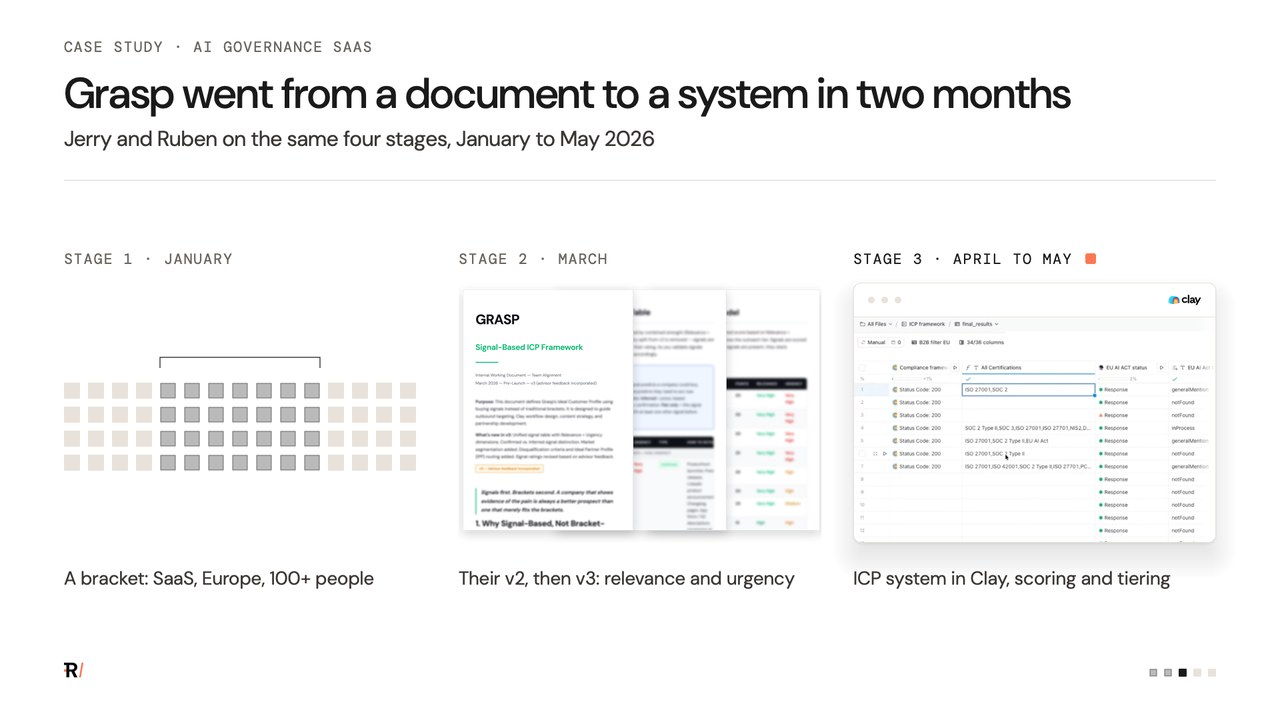
Jerry and Ruben, co-founders of Grasp, an AI governance platform, went from a document to a system in two months. In January their ICP was still a bracket: SaaS, Europe, 100+ people. By March their documentation split each signal into relevance and urgency. By May it ran in Clay. Their gates ran in order: no manufacturers, no B2C, headquarters in the EU or the UK. Funding became a signal, not a gate. A CISO in place showed relevance, but a company can have a CISO for years without buying. A certification deadline or an AI launch is the urgency.
PDF · 48 pages · 7.9 MB
The lesson covered one layer. RevTech Academy carries it into the whole revenue system, in six weeks of live sessions.
Cohort 1 · Applications open
Become the architect behind the revenue system. Six weeks, one real business brief, carried from revenue strategy through process architecture in Puzzle to orchestration in Clay.
Kicks off November 2
Apply now
Cohort 5 · Waitlist open
Turn your GTM expertise into a premium advisory business. Where experienced GTM and RevOps operators learn to position, price, and sell their strategic judgment – not their hours.
Next cohort starts Q1 2027
Join the waitlistArticles and resources
The expert lens on where business and technology converge. Essays and field notes from GTM and RevOps operators building revenue systems.